



WHEN GAIN IS THE GOAL

WHEN GAIN IS THE GOAL
Danny Spantman
By Caitlin Carlson
6 Minute Read
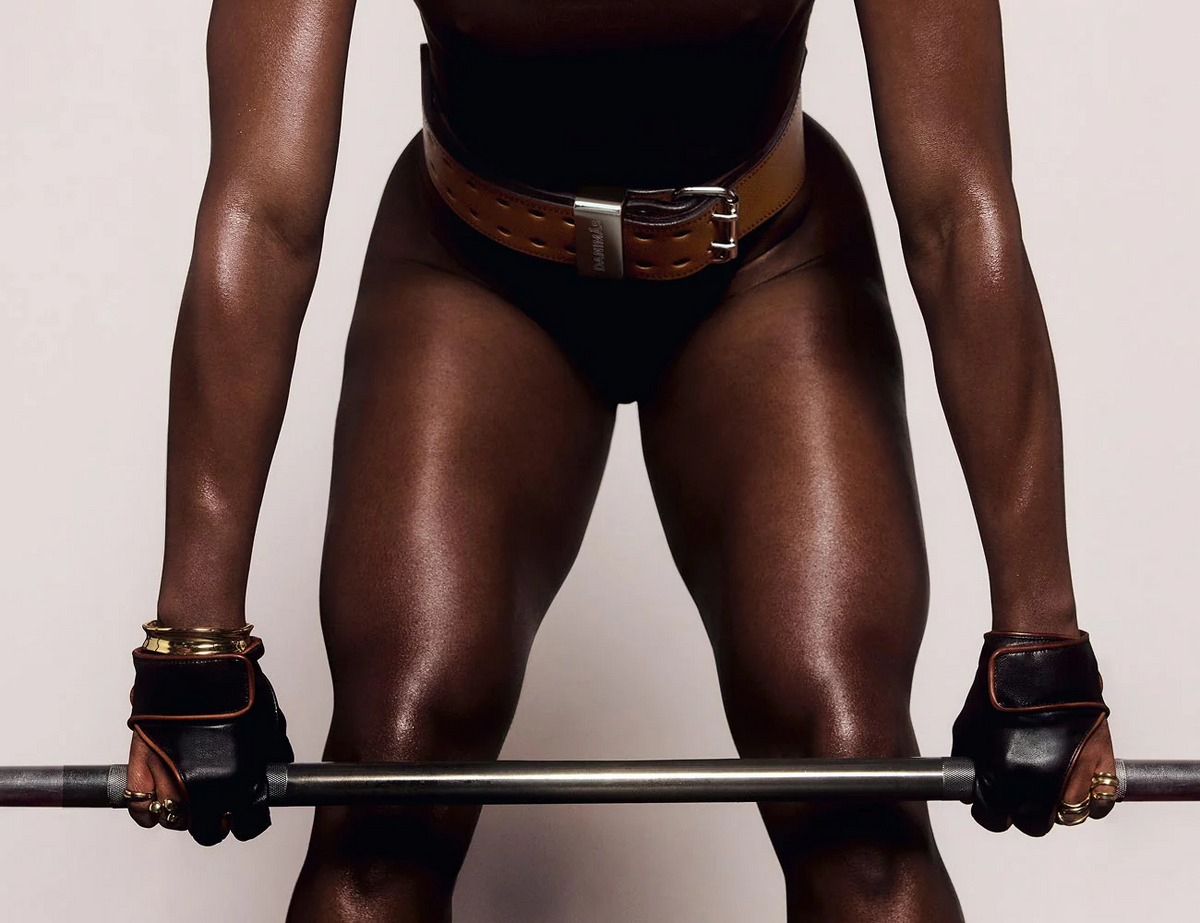
Building muscle is your path to glory—step on it here.
Today, the need for women—especially women over 40—to build muscle has become a mainstream concept. We know that to live long, we have to get strong. But physical strength is just the beginning.
Increased muscle mass has been proven to strengthen bone density, help regulate blood sugar levels, improve cognitive function, and elevate your metabolism. Here’s a secret: Lean muscle burns calories even when we’re on the couch. Feeling empowered in our body is also a serious confidence booster. Not only do our clothes fit better, but we hold our heads higher; that confidence is carried into so many other scenarios. Who needs help with their overhead luggage when they travel? Not us.
For professional athletes, strength has always been synonymous with performance. When downhill skiing legend Lindsey Vonn announced she’d be coming out of retirement to compete in the next Winter Olympics, she predicated the decision on gains: “I need to put on weight, man,” she told a CBS reporter. “I’m about 20 pounds less than when I was racing before.” Meanwhile, British track athlete and 2x Olympian Keely Hodgkinson rebuilt from injury in the gym last year, focusing on gaining muscle across her body, especially in her legs and glutes. She went on to blaze world records.
It’s never too late to become intentional about growing—to buck popular culture’s narrative and build your body, instead of shrinking it. “Women can gain a substantial amount of muscle at any point in their lives,” says Dave Rienzi, a strength & hypertrophy coach and Hollywood trainer. He notes that changes become evident in about three weeks, with visible definition around six to eight weeks. Even better, increased muscle mass can help women live longer. That’s right: Higher testosterone might give men the advantage when it comes to gaining muscle, but a 2023 study found that strength training gives women the edge in defying death.
Strength is not just physical, it’s also mental. The undeniable power and sense of capability that comes with building strength in the gym is an unlock across our life. Women of all ages realize they really can do hard things; that if we commit to ourselves, we can grow. Training is also an act of intentional me-time, which many of us struggle to carve out. That one hour in the gym is a moment’s peace where you can prioritize yourself, and your personal goals. Giving ourselves the permission to do that helps us set healthy boundaries across the rest of our life.
Training is an ultimately personal journey, but women all over the world share in the collective passion and sense of progress. Gyms can be where community is found–an automatic connection to likeminded women who are also of a growth mindset. In a world that can feel obsessed with smallness, there's something revolutionary about women aiming to gain. By building muscle, we aren't just changing our bodies. We’re changing the whole conversation. And doing it alongside other women only amplifies the momentum.
10 Essential Tips for Building Muscle:
Find a Trainer that Knows Women.
If you’re new to strength training, Rienzi suggests taking group classes first. Then, hire a trainer to help master form and technique for bigger lifts like squats and deadlifts (and to help prevent injury). To get the most relevant instruction, seek out pros with experience training women; those with niche credentials, such as working with women who are pregnant, postpartum, over 40, or menopausal, are your best bet. If you’ve been lifting for a while and want to level up, ask someone at your gym who is between sets or a floating trainer if they’ll spot you on a heavier set of chest presses.
Hit Each Muscle Twice a Week.
“Research shows that training each muscle group twice a week is optimal for hypertrophy [or muscle growth],” says Rienzi. If you’re hitting the gym four days a week, try two upper-body days and two lower-body days. If you have less time, focus on total-body sessions that target all the major muscle groups: chest, shoulders, arms, back, glutes, legs, and abs.Push to Failure.
While it’s true that lifting is about taxing your muscle fibers, going too heavy can backfire. What’s the sweet spot? “Push to failure—or close to it,” says personal trainer Holly Perkins, BS, CSCS, author of the upcoming book Muscle & Bone. “The whole workout is really about that final set that exposes your body to the intensity it needs to adapt and grow.” Try to gradually increase your efforts. In a three-set exercise, do the first set at 75% of your max, the second set at 85%, and the third set at 95 to 100%. The goal is to eke out that final rep without breaking form.Up the Ante Every Week.
Progressive overload is mission-critical for muscle building. Rienzi recommends pushing your intensity each week, whether you’re lifting more weight, doing more reps, or resting for less time between sets. Add more reps before adding more weight. “Once you’ve added three to four reps to your top, or third, set, then it’s time to increase the weight during the next workout,” he says. Be patient and consistent. “Strength gains are not necessarily linear."Increase Time under Tension.
In strength training, prolonged tension is everything. “Control the weight on the eccentric (or lowering) portion of the exercise, fighting it on the way down, and hold for a couple of seconds,” Rienzi says. For example, in a bicep curl, you’d lower the weights slowly, lift them at a moderate tempo, hold for a couple of counts, then lower again slowly before repeating. This technique helps keep blood in the muscle, which is crucial for growth and muscle protein synthesis , says Rienzi. It also boosts the mind-muscle connection, leading to greater muscle activation and faster gains.Go Easy on the Cardio.
When the goal is more muscle, Perkins says you can deprioritize cardio. Not only can prolonged cardio lead to muscle loss and inhibit the muscle-building process , but aerobic exercise also tires the body, making it harder to go all-out in strength sessions. Rienzi agrees: “Fifteen to 30 minutes of steady-state cardio a day is enough to get the heart health benefits without negating the work you’re doing to put on muscle.”Eat Enough Protein.
“You can do all the weight training in the world, but if your nutrition isn’t on point, you won’t gain muscle,” Rienzi says. Protein is crucial. Aim for a daily 1:1 ratio of grams of protein per pound of bodyweight (so a 145-pound person should aim for 145 grams of protein). He prefers animal sources like lean beef, chicken breast, turkey breast, whole eggs or egg whites, white fish, and salmon because they contain leucine, a key driver of muscle growth, and suggests supplementing with whey protein powder isolate , ideally one that is third-party tested. (Search the NSF for certified brands.) Note to plant-based eaters: Many vegan protein powders also have leucine. Timing tip: Have 15 grams of protein before a strength-training session and 30 to 35 grams afterward to support muscle recovery and growth.Eat Enough Carbs, too.
“You need the right amount of protein and carbs if you want to perform well and build muscle,” says Perkins, noting that low energy, food cravings, and poor brain function could be signs that you need to eat more carbohydrates. Rienzi agrees. “If a woman is eating enough protein and lifting but not seeing muscle gain, that could be a sign to bump up the carbs ,” he says. Like with protein, timing matters. “Consuming carbs before a workout provides muscles with enough glycogen to get the most out of your workout,” he says. Try fast-absorbing carbs like white rice or white potatoes paired with a lean protein. “After the workout, get more carbs in to replenish those glycogen stores. Add a powder like Karbolyn to your protein shake to kickstart recovery.”Try Creatine (and Other Muscle-Boosters).
When it comes to muscle building, creatine monohydrate is it. Studies show it can increase muscle mass, reduce fatigue, and enhance exercise capacity. Perkins recommends three to five grams per day. If you’re already on the creatine bandwagon, consider some of Rienzi’s other go-to supplements: beta alanine (3.2 grams is the recommended dosage) to “help with buffering acid during the workout, enabling you to work out harder” and electrolytes to “help the muscles contract more efficiently.”Let Your Muscles Sleep In. Sleep is the magical time when muscles repair and rebuild, so trainers generally recommend you get a minimum of seven hours. Tracking devices like Oura Ring and Whoop can give you data on things like recovery and deep sleep, which you can use to help determine your exercise schedule and rest days.
This article is for informational purposes only—even if it includes insights from medical professionals, fitness experts, nutrition specialists, or other wellness advisors. It is not a substitute for medical advice, diagnosis, or treatment. Always consult a licensed healthcare provider before making any changes to your diet, exercise routine, supplement or medication regimen, or lifestyle habits. We make no guarantees about the effectiveness or safety of the strategies, products, or services mentioned. Never disregard professional medical advice or delay seeking it because of something you have read in this article. Your reliance on any information provided by Danimás is solely at your own risk. In no event will Danimás be liable for any loss or damage including, without limitation, indirect or consequential loss or damage, or any loss or damage whatsoever, arising from the use of or reliance on any information provided in this article.
