
The
Weakest
Link in Your
Training is Your Gut

THE WEAKEST LINK IN YOUR TRAINING IS YOUR GUT
Death to Stock
By Liz Plosser
5 Minute Read
Everyone is selling the future of gut health. Nobody is talking about how it's already impacting your workouts.
On the fourth day of our 20th anniversary trip through Switzerland, I was over it. Not the mountains. Not the saunas. Not my husband. My digestive system.
Transparently, I hadn’t pooped in days. At first it was mildly annoying, then my jeans stopped fitting comfortably, and then my stomach started aching on hikes when it should’ve been my quads or lungs that were struggling. By the time we had dinner reservations at a Michelin-starred restaurant in Vals on the sixth night, I was staring at the body-con blue striped skirt I’d packed thinking, Oh boy. The outfit whispered sexy, and my gut screamed the opposite. I felt bloated, uncomfortable, and grateful for my skirt’s very high waistline.
This was not my first rodeo. I get constipated every time I travel. I’ve written about it. I’ve reported on it. I’ve spent an unreasonable share of my life trying to outsmart it.
But climbing Swiss switchbacks with a stomach that hurt clarified something we badly underestimate in women’s fitness. A bad gut isn’t just a digestive problem. It’s a performance problem—and a confidence problem.
THE BODY KEEPS THE SCORE
Our guts take cues from nearly everything we do. What we eat matters, of course, but so do stress, sleep, hydration, medications, travel, how much we’re eating and, for women, hormonal shifts. GI symptoms often change around menstruation and again during the menopause transition. And “inflammation,” despite becoming shorthand online for everything from bloating to constipation, is not an explanation for most everyday stomach problems. Are our guts actually worse than they were 50 years ago? It’s surprisingly hard to know. We’re certainly measuring them more, talking about them more—and selling more things to fix them.
Anecdotally, women spend inordinate amounts on supplements, anti-bloat gummies and detox teas that promise a flat tummy. It’s understandable: discomfort aside, if we’re training abs, eating ‘right’ and recovering well, we want to be able to see the results.
To add further insult: your gut can make a mockery of core work. You can train abs five days a week and still spend half the month with a midsection that looks nothing like the work you’ve put in. The gut punch? It’s not even body fat. It’s gas, stool and water.
REAL TALK: YOUR GUT HEALTH IS AFFECTING YOUR LIFTS
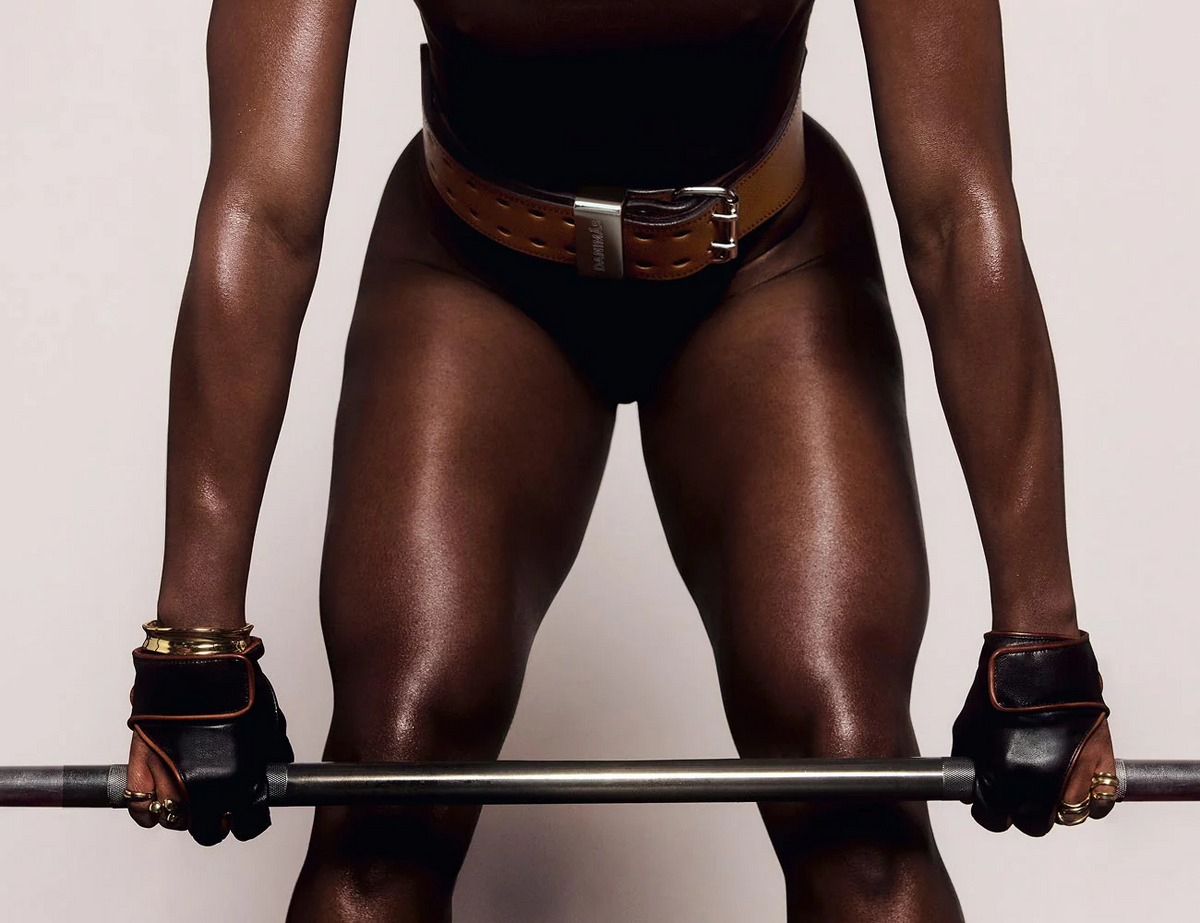
Consider how often your stomach shapes a workout. You skip breakfast before lifting because eating makes you queasy, then wonder why you faded during your last two sets. You pull a plate off the barbell at the gym, because bracing under load means adding pressure to an abdomen that’s already full and tender. Runs get planned around bathrooms. You leave Pilates early and tell people you had a work Zoom.
One friend of mine confessed she booked a colonic two days before a marathon. Paying a stranger to flush water through her colon felt preferable to running 26.2 miles, as she put it, “with a bowling ball in my gut.”
The symptoms—and, for some women, the associated anxiety—follow you. During a flare-up, your workout shorts feel uncomfortable; a sports bra could feel suffocating. That angst creeps into your clothing choices. It affects whether you want to be seen. Whether you want to be touched.
GUT HEALTH IS GETTING A GLOW UP
Women are about twice as likely as men to have irritable bowel syndrome and other functional gastrointestinal disorders, according to a review in Mayo Clinic Proceedings. The wellness industry has seen opportunity in our dysregulation.
Gut health has never been more prevalent—or trendy. There’s a prebiotic soda in every cooler, fiber gummies at the checkout line at Target and Costco, sleep-adjacent “gut-brain” powders promising to support everything from digestion to stress and mood, $279 stool-sequencing kits that analyze your microbiome and spit back personalized food and supplement recommendations, and even toilet sensors from companies like Throne and Kohler that analyze your bowel movements and push the results to an app on your phone.
You can now mail your stool to Viome or ZOE and get back a profile of your microbiome and personalized recommendations for what to eat. Pendulum sells Akkermansia muciniphila, a probiotic bacterium being studied for its role in the gut lining and metabolic health. Seed’s daily synbiotic—a combination of 24 probiotic and prebiotic strains—is marketed for regularity, bloating, gas and digestive discomfort. Tiny Health has expanded its microbiome testing into menopause-focused reports. And Suna, expected to ship next year, says its wearable abdominal patch will continuously track digestive patterns and show how they correlate with food, sleep, stress and exercise.
The ambition is bigger than better digestion. These companies are trying to make the gut—an internal system we mostly notice when something goes wrong—more visible. If the technology delivers, it could help people identify triggers and understand how food, stress, sleep and exercise shape their symptoms. There’s an emotional appeal to that kind of clarity, too: turning a frustratingly opaque part of the body into something you can understand, anticipate and perhaps even control.
HOW TO GLOW UP YOUR GUT
When I panic-texted gastroenterologist Dr. Wendi LeBrett before holiday travel last year, her advice was (almost disappointingly) ordinary.
1. Start with enough food, and aim to eat it on a schedule.
Why: Chronic under-fueling slows the digestive tract, and plenty of women who train hard aren’t eating enough. The colon’s strongest contractions come after a meal, which is one more argument against skipping breakfast.
2. Focus on your fiber intake.
Why: Most Americans fall well short of the recommended 25 to 30 grams a day. The trick is adding it gradually—a sudden jump leaves you more bloated than when you started.
3. Focus on your water intake.
Why: Fiber needs fluid to work. In one clinical trial, adults on a high-fiber diet who also drank about two liters a day had more frequent bowel movements and used fewer laxatives than those eating the same fiber without it.
4. Walk more.
Why: Consider this the first-line treatment. It stimulates the muscles that move waste through the colon.
5. Eat kiwi and prunes.
Why: These foods pull their weight. In a randomized clinical trial, two green kiwifruit a day increased complete spontaneous bowel movements, and prunes have a similarly strong record.
6. Supplement with psyllium or magnesium oxide.
Why: Psyllium is excellent to increase bowel movement if you can’t get there through food alone. Magnesium oxide is an osmotic laxative that draws water into the bowel and the first supplement ever endorsed for chronic constipation in the joint American Gastroenterological Association and American College of Gastroenterology guidelines.
7. Rub your tummy.
Why: My masseuse in Pontresina offered to do abdominal massage and I gratefully accepted, then got a refresher on rubbing my own belly clockwise. A 2025 meta-analysis of 23 studies in the International Journal of Nursing Studies found it increases bowel movements and shortens transit time, with no adverse effects. Plus, it feels good.
Your gut is your second brain, and it’s responsible for everything from your skin’s health to inflammation. Hopefully, researchers will soon come up with clever, easy ways to diagnose and treat the array of gut disorders so many women struggle with; imagine life if bloating became a distant memory? Until then, remember that almost everything with good evidence behind it right now is already within reach: enough food, more fiber, water, a walk, and a kiwi for good measure.
Sometimes the thing standing between a woman and getting stronger—or feeling sexy in her bodycon dress—isn’t her training plan. It’s a gut that hasn’t yet given her the chance to find out what she’s capable of.
This article is for informational purposes only—even if it includes insights from medical professionals, fitness experts, nutrition specialists, or other wellness advisors. It is not a substitute for medical advice, diagnosis, or treatment. Always consult a licensed healthcare provider before making any changes to your diet, exercise routine, supplement or medication regimen, or lifestyle habits. We make no guarantees about the effectiveness or safety of the strategies, products, or services mentioned. Never disregard professional medical advice or delay seeking it because of something you have read in this article. Your reliance on any information provided by Danimás is solely at your own risk. In no event will Danimás be liable for any loss or damage including, without limitation, indirect or consequential loss or damage, or any loss or damage whatsoever, arising from the use of or reliance on any information provided in this article.


