
THE CURVUSCULAR™ WORKOUT: DAY 2

Death to Stock
By Dany Garcia
DAY 2. UPPER ABDOMINALS: BUILD THE FRAME
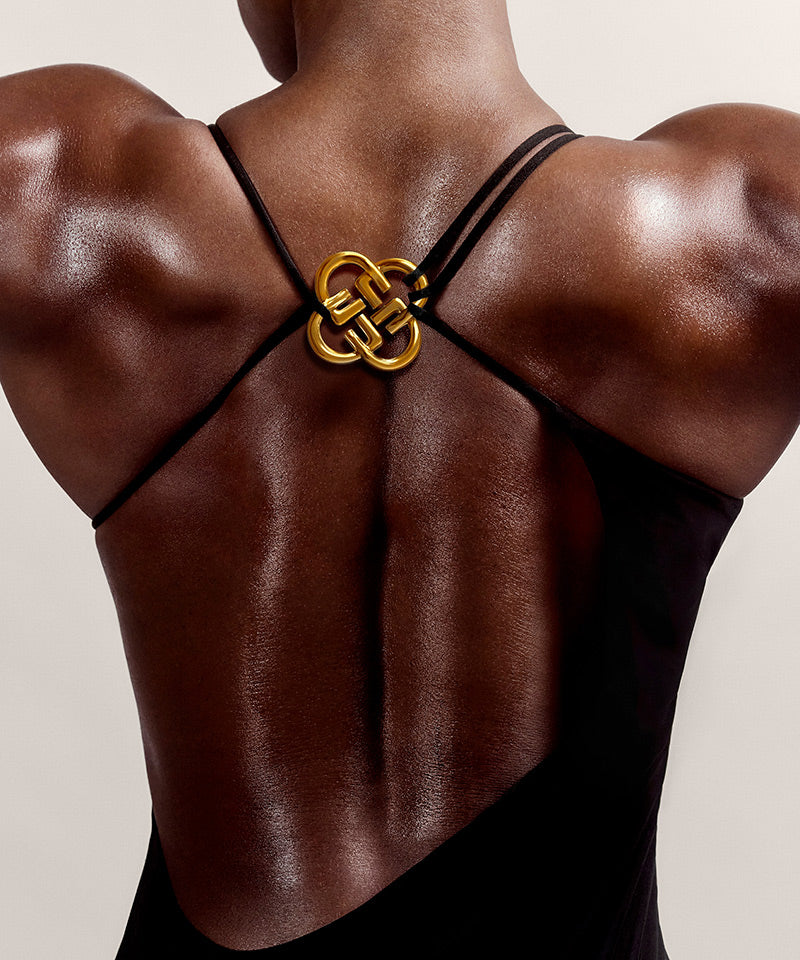
The aim: Physique intention: develop shoulders and back for upper-body structure, posture and visual taper. Where posture stops being a correction and starts being a presence.
CHOOSE YOUR INTENSITY
-
FOUNDATION: greater stability, simpler execution and an opportunity to learn or return to the movement.
-
BUILD: the standard Curvuscular 01 option for someone comfortable with resistance training.
-
POWER: a progression for experienced lifters who already possess the technique and strength required for greater loading or complexity.
Coaching cues: Pushing harder is not better here; executing the moves properly is what gets results.
Step 1: Align
1. Wall Breathing: 5 breaths
Training cues: Stack ribs over pelvis. Quiet inhale into sides/back. Relax neck and shoulders
2. Wall Slide: 8 reps
Training cues: Ribs controlled. Reach without aggressive shrug. Allow shoulder blades to move naturally
3. Band Pull-Apart / Scapular Retraction: 10 reps
Training cues: Long neck. Move through your shoulders. Do not thrust ribs forward
Step 2: Connect your core
1. Side Plank: 2 × 15–30 secs per side
Training cues: Push floor away. Long line through body. Hips lifted. Brace without breath-holding
The why: Develop lateral trunk stability
2. Suitcase Carry: 2 × 20–40 sec/side
Training cues: Weight on one side. Stand as though carrying nothing. Do not lean. Walk slowly and deliberately
The why: Integrate core, posture and grip
Step 3: Strengthen
1. Resistance-Band Pulldown: 2–3× 8–12 reps (FOUNDATION)
OR: Machine/Cable Lat Pulldown: 2–3× 8–12 reps (BUILD)
OR: Assisted or Bodyweight Pull-Up: 2–3× 8–12 reps (POWER)
Training cues: Begin long through arms. Drive elbows toward hips. Control torso. Avoid backward lean
The why: Develop lats to build the upper frame and contribute to taper
2. Seated Cable/Band Row: 2-3x 8-12 reps (FOUNDATION)
OR: Chest-Supported Machine or Dumbbell Row: 2–3 × 8–12 (BUILD)
OR: Heavier Chest-Supported Row: 2-3x 8-12 reps (POWER)
Training cues: Let shoulder blades reach • Pull elbows back • Avoid excessive back arch • Control return
3. Shoulder Press by machine: 2–3 × 8–12 reps (FOUNDATION)
OR: Dumbbell or Machine Shoulder Press: 2–3 × 8–12 reps (BUILD)
OR: Heavier Dumbbell/Plate-Loaded Press: 2–3 × 8–12 reps (POWER)
Training cues: Stack ribs over pelvis. Press without backbend. Control lowering
4. Lateral Raise: 2–3× 10–15 reps
Training cues: Use controllable load. Lead outward through elbows. Shoulders away from ears. No momentum
The why: Deltoid development supports the shoulder-to-waist proportion central to the Curvuscular silhouette
5. Straight-Arm Pulldown: 2–3× 10–15 reps
Training cues: Slight elbow bend. Ribs controlled. Pull upper arm toward hips. Think armpits toward hips. Slow return
EFFORT + PROGRESSION
For most working sets, choose a resistance that leaves approximately 2–3x good reps in reserve. Own the movement before you increase the load
Week 1. LEARN: 2 working sets. Establish technique and appropriate resistance.
Week 2. ADD: 2–3 working sets. Add repetitions while maintaining 2–3x reps in reserve.
Week 3. PROGRESS: 3 sets on primary movements; 2–3x on accessories. Increase load when you own the top of the rep range.
Week 4. OWN IT: improve load, repetitions, range, control or execution. Do not add volume simply for the sake of doing more.
TRAINING NOTE
Exercise is individual. If you are new to resistance training or have pain, injury, balance limitations, pregnancy or postpartum considerations, osteoporosis, cardiovascular conditions or other medical circumstances that may affect exercise, seek appropriate guidance from a qualified healthcare or fitness professional. Stop any exercise that causes pain, dizziness or other concerning symptoms.This article is for informational purposes only—even if it includes insights from medical professionals, fitness experts, nutrition specialists, or other wellness advisors. It is not a substitute for medical advice, diagnosis, or treatment. Always consult a licensed healthcare provider before making any changes to your diet, exercise routine, supplement or medication regimen, or lifestyle habits. We make no guarantees about the effectiveness or safety of the strategies, products, or services mentioned. Never disregard professional medical advice or delay seeking it because of something you have read in this article. Your reliance on any information provided by Danimás is solely at your own risk. In no event will Danimás be liable for any loss or damage including, without limitation, indirect or consequential loss or damage, or any loss or damage whatsoever, arising from the use of or reliance on any information provided in this article.


