

AMBER PINKERTON TALKS BODY IMAGE

Amber Pinkerton
6 Minute Read
By Laura Antonia Jordan
The Jamaica-born photographer speaks about muscle, beauty ideals, and how her home country's celebration of curves informs her lens.
At some points in her life, Amber Pinkerton has felt as if she was suffering from scopophobia—the fear of being watched.
The Jamaican photographer is the first to spot the glint of hypocrisy in that anxiety; it is literally Pinkerton’s job to observe other people. “I fear being watched but I also practice the act of watching,” she says with a hands-up-you-got-me smile.
Still, that push-pull is familiar to so many women. In Western culture, narratives around girlhood, womanhood and the female body were ruthlessly unforgiving. This was the time when a ‘nip slip’ could cause global outrage—just ask Janet Jackson—but paparazzi would routinely try to get inappropriate shots of young starlets. It was peak size zero frenzy. Positioning on the celebrity hierarchy rose as a BMI fell; TV shows America’s Next Top Model and The Biggest Loser hammered the message home. Too big! Too small! To say that this era had issues with women's bodies is an understatement.
Yet Kingston-born Pinkerton is “from a place where this model standard is completely rejected.” Her home nation “embraces curvature and weight, it's seen as a form of being healthy.” It’s also seen as being sexy, especially in the case of dancehall culture where “being thick and curvy and having the bum and the breasts” is not just accepted, it’s aspirational. But that’s not to say she wasn’t conscious of her body: Jamaica’s celebration of curves makes growing up a little tough if you’re a naturally skinny teen.
Pinkerton, now 28, is one of the most interesting young photographers working in fashion today. Her work straddles art, documentary and fashion, and it’s clear through her lens that she understands the nuances and complexities of being a woman—she also chooses to communicate vulnerabilities and the strengths in equal measure. Pinkerton became known for her socio-cultural explorations of Caribbean culture, which garnered the attention of brands like Gucci, Nike, Miu Miu and Netflix.
Pinkerton is reauthoring the visual narrative around women’s bodies and sports. Muscle is an act of celebration. In 2024, she shot the sprinter Sha’Carri Richardson and gymnast Jordan Chiles for a Nike campaign. “I was completely amazed by the beauty in their bodies and the abstraction in their muscles,” she says. In shoots like this, “the body becomes the performance. It changes the angle because it's no longer about the clothes but about the power and talent in their body themselves. Whether that's a gymnast, a runner or a basketball player… the body leads the performance of the photograph.”
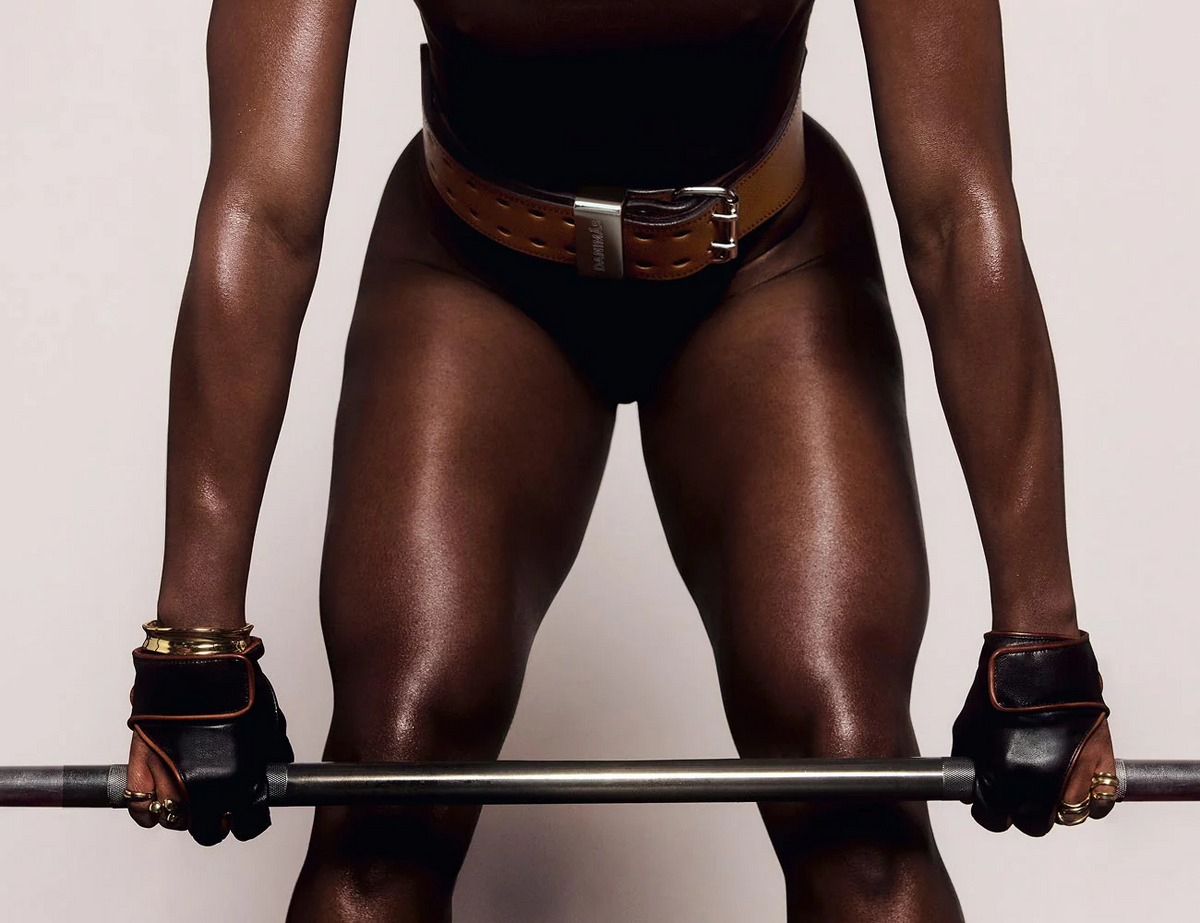
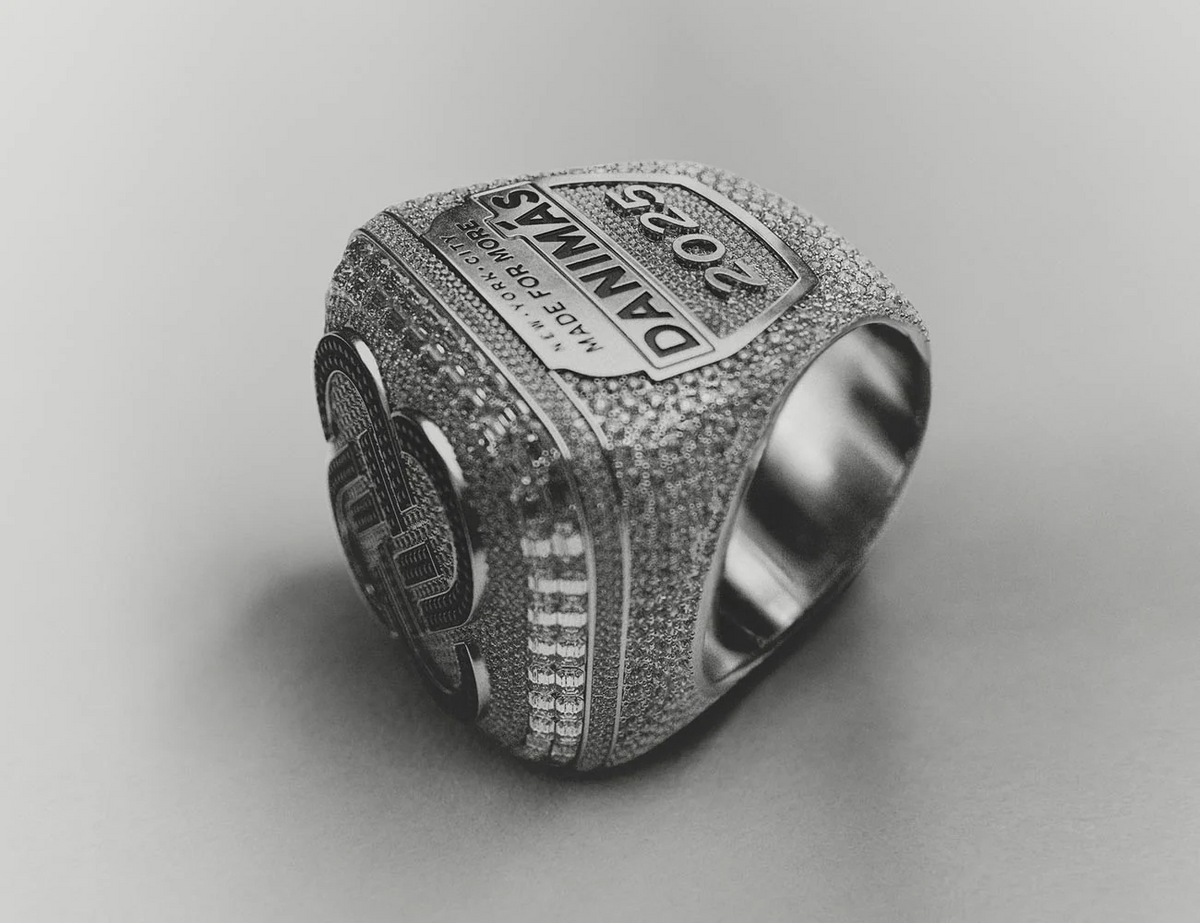
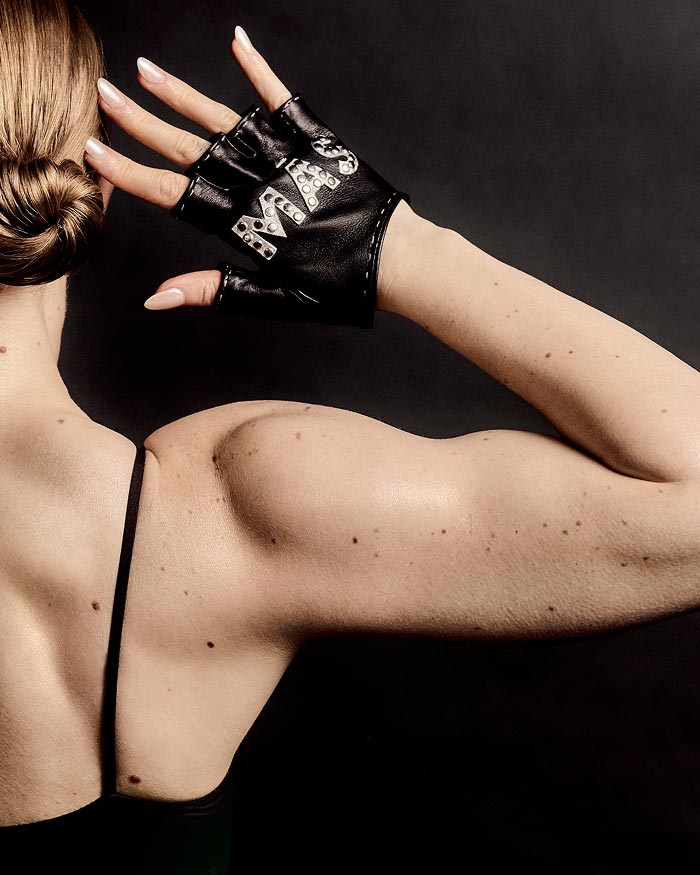
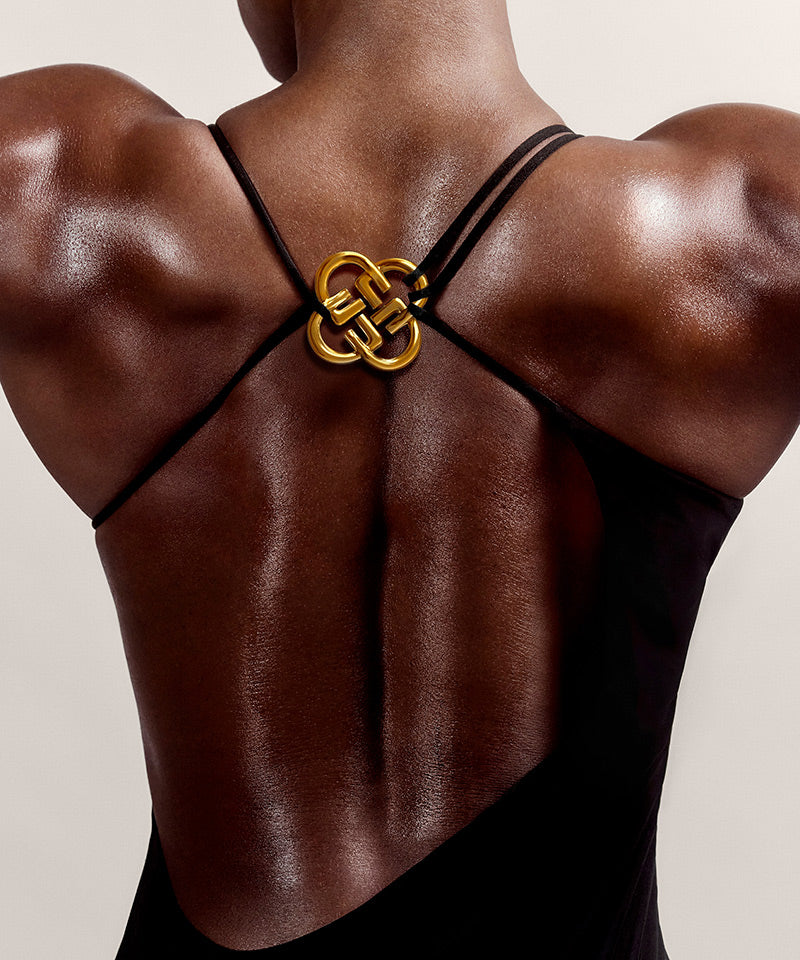
Last year, Pinkerton shot the debut campaign for Danimás, which championed female strength and muscle: she documents both with tenderness and power. Nuance is also found in works of other photographers that she admires, and their depictions of the human body. Jean-Paul Goude’s image of Grace Jones in a striking, masterfully distorted arabesque on her Island Life album cover, for example. An arresting portrait of a pregnant woman by Dutch photographer Dana Lixenberg; Michel Comte’s shot of Tatjana Patitz with a python draped over her naked body. Pinkerton says the Danimás shoot played on the concept of luxury, where muscle is framed as the luxury as you have to invest in it to achieve it—it’s something that has to be earned, not bought. The imagery explores “femininity, power and fashion all in one,” she says. There is no softening of muscles. Tight crops hero them. “The light is [intentionally] harsh so that everything is super pronounced”.
Growing up, the only fashion imagery readily available to Pinkerton was in the magazines in supermarkets; there were no representations of people of color. When she began turning her camera on her friends in her early teens, Pinkerton found herself gravitating towards snapping her white and light skinned friends—not because she thought they were more beautiful, but simply because she was imitating what she saw. Online broadened her vision. Facebook gave her a community of young photographers; Tumblr introduced her to artists beyond Jamaica–beyond her world. At 15, she started interning at a modelling agency; it was seeing a Bruce Weber campaign for Ralph Lauren that gave her a lightbulb moment. “Oh, that's what I want to do with my life,” she realized.


Amber Pinkerton for Danimás
Moving to London when she was 19—Pinkerton’s father is British-Guyanese, her mother is Jamaican—had a profound influence on her career and artistic outlook. Immersing herself in the city’s diversity “had a huge impact on my lens,” she says.
“It was a real culture shock because I never really lived in a world where I was thinking about race and class and all these other factors that can be integrated into photography,” says Pinkerton, adding that being far away gave her a new outlook on her home. She wanted her work to act as “a kind of bridge between the two places”. Today her work often examines the Jamaican diaspora; being one of the only female Caribbean photographers working in fashion gives her “a lot of space to think and philosophise and play with the subjects”.
Today, Pinkerton’s imagery is a method of communication. “I have always felt a gravitation to photographing women from different places, in different ways,” she says. Pinkerton draws out the poetry of the everyday. Her sitters appear empowered, her lens both tender and unflinching; their beauty uncontained by rigid or trendy ideals. And while she loves shooting models, she feels a “compulsion” towards street-casting people who are “totally external to the fashion world. They could be absolutely anybody, they could be a bodybuilder, someone off the street,” she says. “I've always found those subjects pretty interesting.”


Left: Pinkerton finds inspiration in Michel Comte’s representations of the body. Here, in ‘Beauty and the Beast, Tatjana with Snake.' Courtesy Preiss Fine Arts/Editions Comte. Right: Amber Pinkerton is inspired by this image of Grace Jones, from the ‘Island Life’ album cover/Alamy
Her eye for the unconventional means Pinkerton is one of the photographers today helping to recontextualize normalcy, and femininity; she shirks from Instagram culture, where the algorithm also prioritizes homogenous Western standards of beauty. Online, “it’s about having a great shape and great face, smooth skin and perfect hair… Everything is stemmed towards perfection.”
Her work isn’t a rejection of that, it’s an antidote that shows an alternate reality. Her work celebrates bodies with strength, agency, and individuality. Given the rise of semaglutide culture in Hollywood, this feels radical once more. It's something she drew on in her Danimás campaign with its reverence for muscular, sculpted bodies. It reads like a visual manifesto for female empowerment; the body is sculpture.
Pinkerton understands not just the beauty of muscles—the dips and curves and grooves of the body—but their cultural currency too. Growing up in Jamaica, “track is a huge part of our culture, because we do tend to have the fastest people in the world,” she says, referring to Elaine Thompson-Herah—officially the fastest woman in the world—and the five-time 100 meter champion Shelly-Ann Fraser-Pryce, who retired last year.
First hand experience has taught her that power, both physical and emotional, that comes from strength training. She’s been doing it since she was 17, and credits it with “totally changing my confidence.” “It was really through going to the gym that I was able to build my body in a way I liked,” she says.
Now, when she goes home to Jamaica, she works with an “amazing” trainer who has helped Pinkerton to “reject the thoughts of having a specific shape,” she says. “You know… the soft, dainty shoulders and then the [long, lean] legs.” In other words, the small physique women have forever been taught to strive for; the one so common in Hollywood and the fashion magazines and imagery she grew up consuming. “My trainer will encourage us to have (muscular) arms and back and shoulders… [she encourages me to] see that as beautiful.”
Training helps, she says, with self-discipline. It influences “how you eat… showing up every day, and committing to yourself,” she says. “Reaching a challenge that you set out for yourself and your own body” is empowering. Strength training is something she appreciates too because it isn't something you can fake. It takes action not restriction. “It requires time.”
Pinkerton is acutely aware of how physique—and the confidence found in building it—can unlock one’s mindset. She is sensitive to empowering her subjects, wanting them “to feel beautiful and powerful,” she says. But it’s not the whole story. “I enjoy… showing them in a way that they would have never imagined.”
Referencing her own experiences with portraiture growing up, she says, “I just wanted to feel visible and unique.” Today, that’s exactly what she’s giving others.


